
The Amenity Game Has Changed for Arkansas Housing Developers
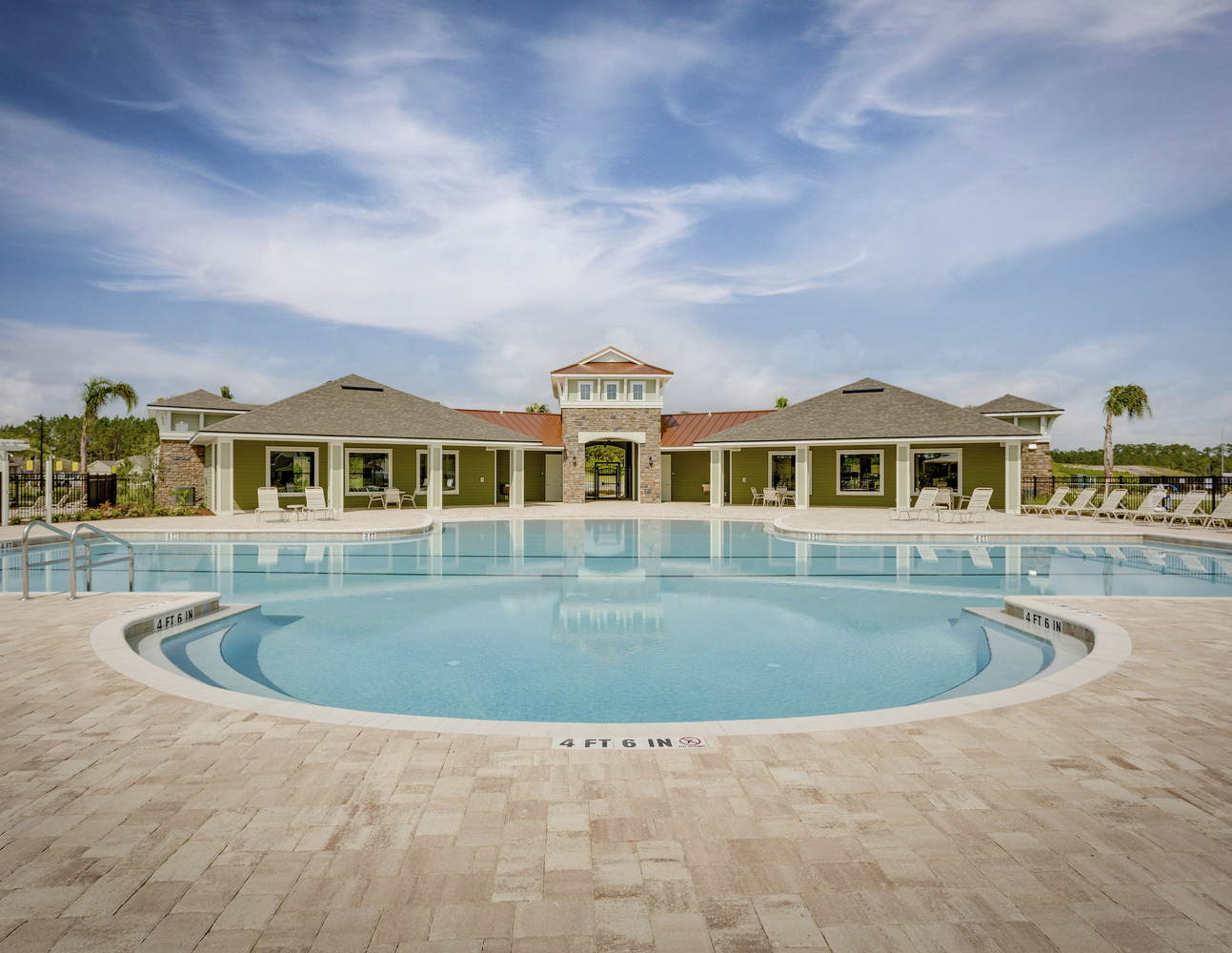 Amenity centers like the one shown above can be a tool for developers looking to sustainably attract homebuyers in competitive markets.
Amid housing market fluctuations and the greater story of massive regional growth in Northwest Arkansas, the game for subdivision developers has shifted. Put simply, achieving a return on investment for housing developments cannot stop at crunching numbers to identify the most optimal lot sizes and housing types. To truly do well in the long term, the opportunity lies in working with landscape architects to create resort-level amenities that inform long-term, sustainable draw for a variety of homebuyers.
Northwest Arkansas is poised for generation-defining growth. As one of the fastest-growing regions in the country, the area is expected to double its population to a total of 1 million by 2050.
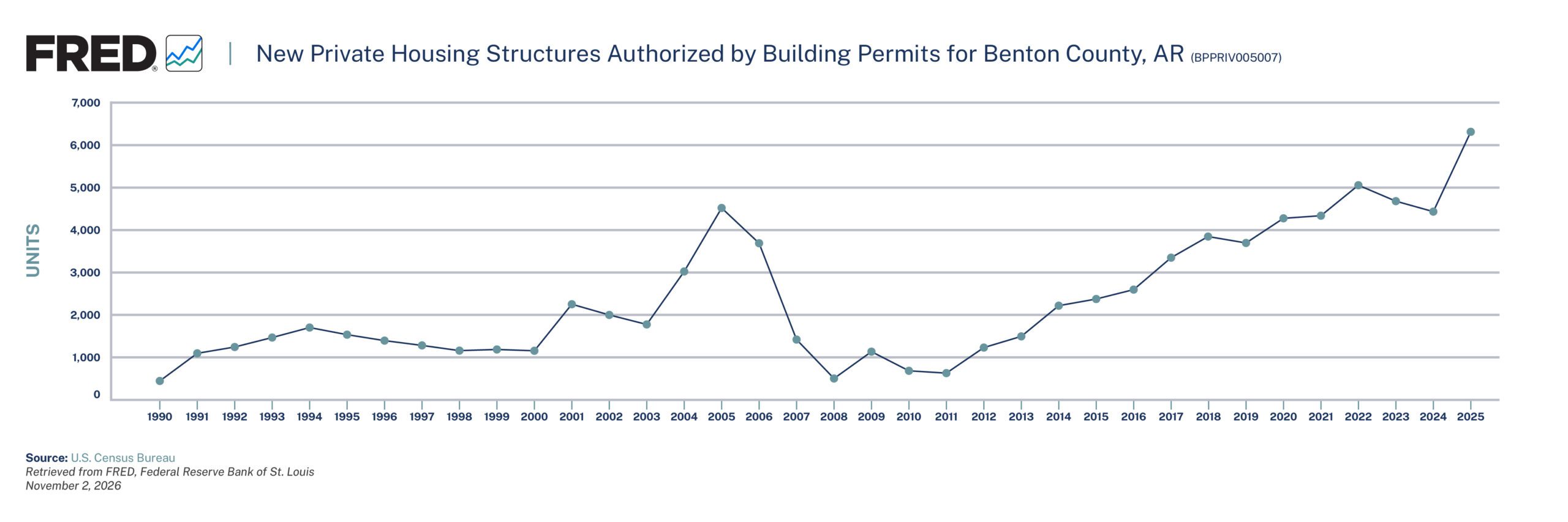
In Benton County alone, the number of housing permits approved per year has steadily climbed since 2012 but has reached new heights in recent years. Before, the county’s biggest year in recent history for housing permits was 2005, with 4,663 permits approved. Permit numbers dramatically dropped following the crash of 2008 and have since been recovering over time. And in 2022, the county topped its 2005 peak with 5,055 housing permits approved. The numbers stayed in that ballpark and then shot up again in 2025 to reach more than 6,000.
Those numbers paint a compelling picture of how the region’s growth translates to housing needs. For developers who want sustainable homebuyer interest, the ebb and flow of housing development builds an even bigger case for pursuing high-quality amenities. When markets favor homebuyers, an oversupply of both new and “just-past-new” housing means the onus is on the developer to stand out to homebuyers. Many buyers are much more likely to buy a five-year-old home with stellar community amenities than to invest in a brand-new house whose community comes with a haphazard pool and pavilion.
Avoiding the ‘Sea of Houses’
While engineers and architects are hired to create plans for subdivisions at large, landscape architects come to the table with a focused, specialized goal. Engineers typically only focus on the essentials of ensuring water drains and utilities are properly established on site. Planning and landscape architecture professionals can take general greenspace plans and elevate them to the next level.
What does this look like in practice? It could mean that dedicated land for a pool is divided in two: one side is designed for children and families with four-foot depths, while the other side is more oriented to adults with partially submerged recliners for sunbathing and sipping on a cocktail. While the subdivision would devote the same amount of land to pool space, creating two options transforms the use into a diversified offering catering to different audiences.
In another instance, elevating amenities could mean adding artistic or architectural elements to what would be an otherwise standard pavilion, transforming the structure into a go-to spot for entertaining guests. Playgrounds, rather than being designed with mulch in mind, could have synthetic turf grounds. Instead of acting as passive visual elements, water features could be enhanced with walking trails and dog parks. On-site pickleball and tennis courts could feature state-of-the-art paving materials and overhead shade.
Approaching subdivision amenities with a resort-level mindset makes particular sense in the Arkansas market, where such product types are somewhat unique to the region. While the Orlando area, for example, boasts its fair share of resort offerings nearby, housing developments in Northwest Arkansas are uniquely positioned to offer an elevated product type that is less common in the region.
At Halff, a number of our professionals have worked on resort developments before. These landscape architects have the knowhow to apply that experience to midsize housing developments within Arkansas’ burgeoning northwest market.
With many municipalities requiring dedicated greenspace as part of subdivision development, there is a clear opportunity for developers to leverage these stipulations into marketing draws. Rather than setting aside green fields that won’t make a profit because of greenspace allotments, developers can create a meaningful, enticing experience that allows their community to stand out to homebuyers.
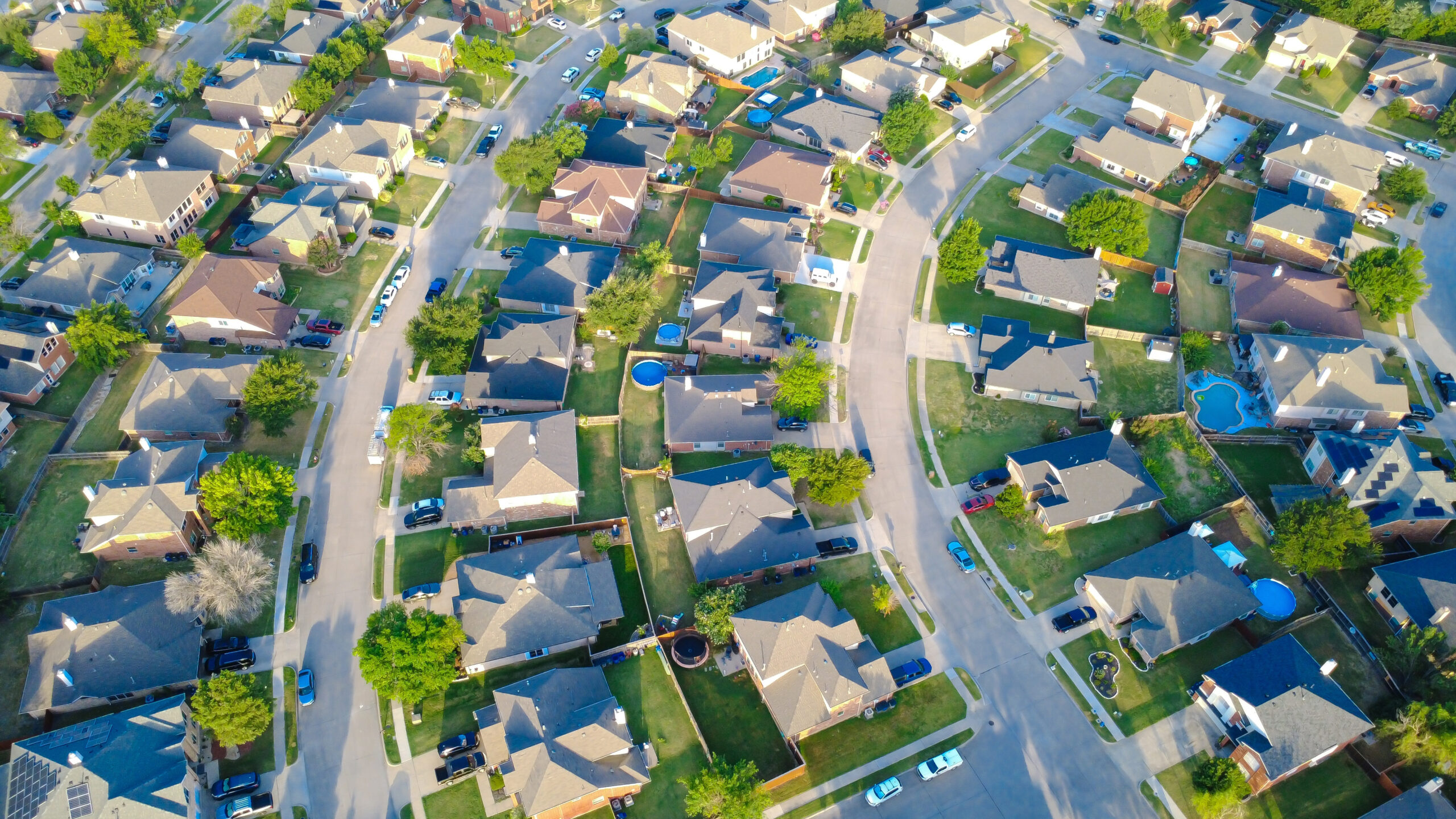
In the end, the developments that stray from creating merely a sea of houses and that prioritize next-level amenity spaces have a much stronger shot at sustainable attraction within the market. This mindset sets the stage for a better return on investment for both developers and homeowners.
Ready to Get Started?
Reach out to Planning/Landscape Architecture Director Jacob Shy (jshy@halff.com) to explore how Halff can help you create valuable amenities for your community’s future growth.

Recent Stories

Inside Halff: A Look at October 2026
From friendly chili competition and Halloween festivities to industry conferences and team outings, October brought plenty of opportunities for Halff…

Halff’s Pifer Selected as ENR Texas & Southeast 2027 Top Young Professional
FAYETTEVILLE, Ark. — Halff Water/Wastewater Director Ashley Pifer, Ph.D., PE, has been named one of Engineering News-Record Texas & Southeast’s…